Table of Content
Your credit, or lack thereof, doesn't matter as much when you put up collateral to secure a loan. The lender can take possession of the collateral if you default, which means they have far less risk in lending to you. But you’ve got the knowledgeable WalletHub community on your side. We encourage everyone to share their knowledge while respecting our content guidelines.
It can also help you weigh the pros and cons of getting a joint or individual home equity loan. When you have bad credit, a home equity loan might have a slight edge over a HELOC. That’s because home equity loans have fixed interest rates and fixed payments, so you’ll know exactly what you need to repay each month.
Business Loans for Black Women Entrepreneurs
The main benefit of using a home equity loan for debt consolidation is the potential for low interest rates and high loan amounts. However, there are risks that come with the process, as home equity loans are secured by the borrower's house. That means it's possible for a borrower to lose their house if they're unable to pay back their loan. As the name implies, cosigned loans involve having someone else — usually a friend or family member — also sign a loan application on your behalf.
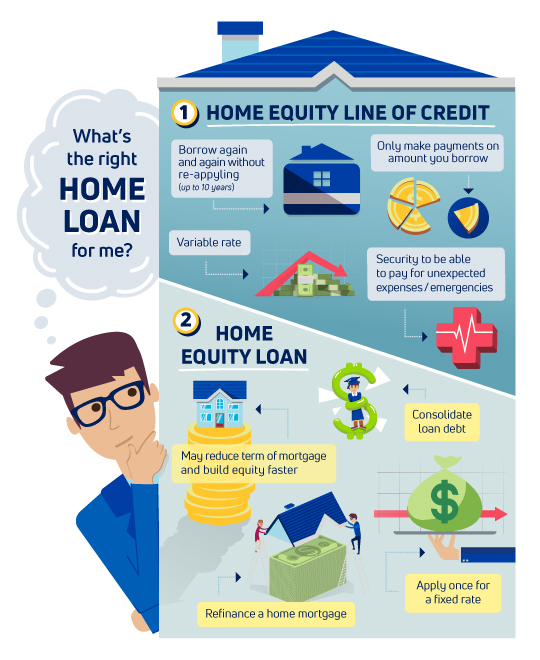
Home equity loans typically have higher rates than first mortgages, because they present more risk for the lender. Defaulting on a home equity loan could put you at risk of losing your home if the lender initiates a foreclosure proceeding against you. The amount of home equity that you can tap into is determined by the lender, and they generally prefer that you borrow no more than 80%. Final approval for a home equity loan is based on how much equity you’ve accumulated , as well as your credit score and history, income, and debt-to-income ratio. There is no mandated credit score that’s required to get a home equity loan, though credit bureau Experian says that a score of 680 or higher should do. In general, a higher score means easier approval and a lower interest rate.
U.S. Bank $50,000 Home Equity Loan
Before accepting the loan offer, have an honest discussion about the loan amount, terms and repayment plan with your co-signer. If you have contingencies in place, it’s less likely that your relationship will be at risk down the line. Co-signers are common when the borrower struggles to get approved for a loan based on their credit score, income or existing debt. You can check for loan offers without hurting your credit score since Stilt uses a soft inquiry to generate loan preapprovals. If you need a personal loan in the United States but are not a citizen or a permanent resident, not many options are available to you. Even some common options with a low eligibility barrier such as payday loans may not be available to these groups.
Having no credit disqualifies you from getting most unsecured loans, as lenders usually require an established credit score of 600 or higher. You don’t necessarily need a cosigner to qualify for a loan, even if you have bad credit. While unsecured loans that cater to bad credit won’t offer great rates, you can get better terms by taking out a secured loan that requires collateral. The most common types of collateral are money in a bank account, a vehicle or real estate, but some lenders may accept other valuables.
What are unconventional personal loans?
Another issue is that the cosigner may have difficulty getting their own new line of credit in the future. That’s because a lender may think the cosigner’s debt level is too high. And if the cosigner wishes to remove themselves from the account, it’s often difficult. According to the Consumer Financial Protection Bureau, a cosigner is someone who takes full responsibility to pay back a loan if the primary borrower does not. Most major credit card issuers don’t allow cosigners but do allow adding an authorized user to an account. A cosigner on a credit card application may improve your chances to be approved.
The lender considers both your income and your mother’s when they look at your application. Lenders also consider your mother’s finances, debt and credit when they look at your application, and decide to approve you for your loan. Although requirements vary, most lenders want to see a minimum credit score in the mid-600 range and a sizable percentage of equity in your home (usually 15% to 20%). Information provided on Forbes Advisor is for educational purposes only. Your financial situation is unique and the products and services we review may not be right for your circumstances.
Both co-signers and co-borrowers share in the responsibility of taking out a loan. You can also be a nonoccupant co-borrower, meaning you’ve agreed to take on responsibility for the payments on a mortgage even if you don’t live in the home. There is sometimes confusion on this point, but there really is no difference between being a co-signer and a co-borrower. Another option is to refinance your current mortgage with a new loan at a larger amount, and pocket the difference. This is similar to a home equity loan, as you still need to have at least 20% equity to qualify and your home serves as the collateral for the loan. However, if you’re able to refinance at a lower rate than what you’re currently paying, it could be a good deal.

We do not offer financial advice, advisory or brokerage services, nor do we recommend or advise individuals or to buy or sell particular stocks or securities. Performance information may have changed since the time of publication. You also need to have sufficient equity built up in your home, especially if you’re attempting to secure a home equity loan with bad credit. Lenders use what’s called a loan-to-value ratio that divides your current mortgage balance against your home’s current appraised value. For example, if your home is worth $300,000 and you still owe $240,000 on your mortgage, your LTV is 80% ($240,000/$300,000).
The important thing to keep in mind is that, legally, cosigners are every bit as responsible for the debt as the person they’re helping out. Lindsay VanSomeren is a personal finance writer based out of Kirkland, Washington. Her work has appeared on Business Insider, Credit Karma, LendingTree, and more. If your friends and family are financially stable and willing to lend you the money but prefer not to co-sign on a loan, consider asking them for the money outright. You could ask for it as a gift, or better yet, a loan that you repay back to them.

All loans are subject to credit review and approval by our lender partners. When evaluating offers, please review the lender’s terms and conditions for additional details. By adding a cosigner's income and credit history to your loan application, you’ll drastically increase your odds of qualifying for attractive terms. In this way, the cosigner is leveraging their good credit to help you strengthen your own reputation as a borrower. It’s possible to apply for a first or second mortgage loan as a couple even if you’re not married.
Carl Carabelli has been writing in various capacities for more than 15 years. He has utilized his creative writing skills to enhance his other ventures such as financial analysis, copywriting and contributing various articles and opinion pieces. Carabelli earned a bachelor's degree in communications from Seton Hall and has worked in banking, notably commercial lending, since 2001. According to the Federal Trade Commission, three out of four co-signers are asked to repay the debt.

For example, if you have a credit score of 550 and limited income, you probably won't qualify for any worthwhile personal loans. But if you have a cosigner with an 800 credit score and a lot of income, you're likely to get a loan with very good terms. If you fail to make payments, you’ll hurt the cosigner’s credit, too, and they’ll be on the hook for paying. That could put a heavy strain on your relationship with the cosigner. In general, the best personal loans to get with a cosigner offer APRs as low as 5.99% and loan amounts as high as $100,000. Many of the best options also don’t charge origination fees, which helps to minimize the cost of the loan.
This predictability could help you better manage your budget and keep up with payments. A HELOC, on the other hand, has a variable rate, which could mean your payment adjusts up at some point in the future. If that happens, you could find yourself unable to afford the payments, which would further harm your credit. Even when the primary borrower is making their payments, you’re on the hook if that changes, and lenders don’t distinguish between potential debt and current debt.


No comments:
Post a Comment